Cactus Floor-to-Ceiling Cat Tree: Adjustable, Stable Tower
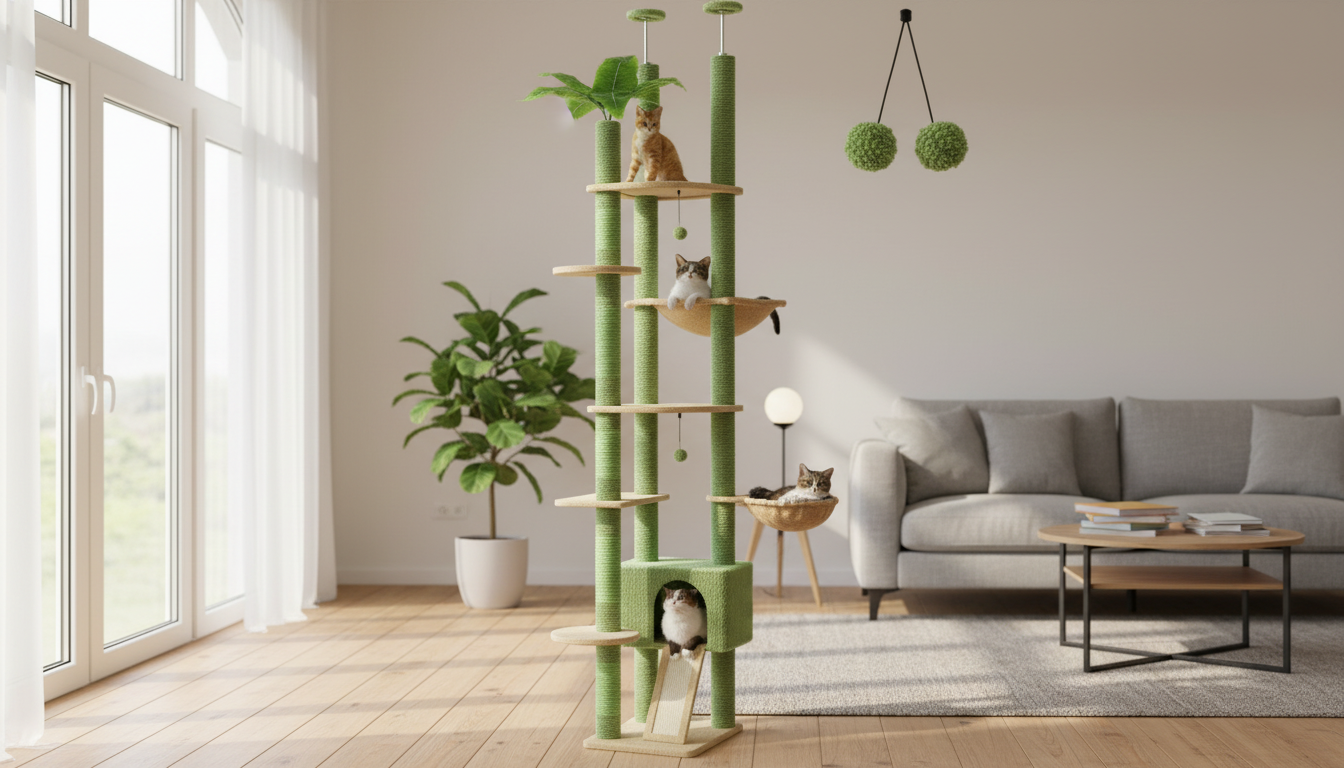
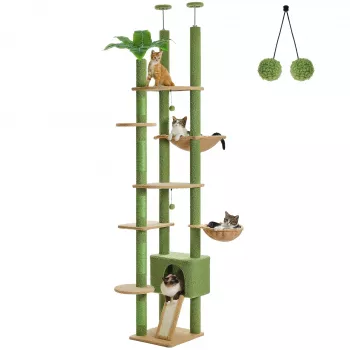
Cactus Cat Tree Floor to Ceiling Cat Tower with Adjustable Height
A floor-to-ceiling cat tower adds vertical territory without taking up much floor space. This cactus-themed design combines climbing, scratching, and perching in a tall, room-friendly setup, while the adjustable height helps it fit different ceiling heights and stay stable for daily play.
What Makes a Floor-to-Ceiling Cat Tower Different
Traditional cat trees spread outward to stay steady, but a floor-to-ceiling tower “claims” height instead of square footage. That changes how cats use it—and how it fits into a home.
- Uses vertical space to create multiple levels for climbing and lounging
- Tension-style height adjustment helps the tower fit snugly between floor and ceiling
- Encourages natural behaviors: climbing, scratching, surveying, and resting up high
- Helps reduce boredom by expanding usable territory in smaller rooms or apartments
Many cats feel more confident when they can observe from above, especially in busy households. Environmental enrichment that includes climbing and safe perching is widely recommended by feline welfare organizations such as the American Association of Feline Practitioners (AAFP) and International Cat Care.
Cactus-Inspired Look, Practical Cat Function
A themed cat tower doesn’t have to be “just cute.” The cactus styling can make a tall tower feel intentional in a living room or home office, which often means it gets placed where cats actually want to spend time.
- Decor-forward design that blends into modern rooms while still feeling like a cat play zone
- Tall profile supports perching preferences for cats that like to watch from above
- Multiple touchpoints give cats options: scratch zones, platforms, and transitions between levels
- A themed tower can make it easier to place in living areas rather than hiding it away
For many cats, the most-used “features” aren’t the toys—they’re the predictable pathways. A vertical tower with clear stepping points helps cats travel up and down without hesitation, which can matter in multi-cat homes where confident movement reduces crowding.
Adjustable Height and Stability Basics
A tension-mounted tower should feel like part of the room, not a wobbly accessory. Stability comes from correct measurement, proper placement, and occasional quick checks.
- Measure floor-to-ceiling height before ordering and allow a small margin for adjustment
- Place on a level surface; avoid thick rugs that can reduce stable contact
- Position away from ceiling fans, fragile wall decor, and shelves with breakables
- Re-check tightness periodically, especially after enthusiastic jumping or multi-cat play
If the tower will be near a window, consider how the sun moves across the day. A bright perch can be a favorite nap spot, but constant intense heat can make upper platforms less comfortable in midsummer.
At-a-Glance Specs and Fit Guide
Use the checklist below to confirm room fit, cat fit, and daily-use priorities. If choosing between two locations, the best spot is typically the one with the most stable footing and the least foot traffic.
| What to Check | Why It Matters | Quick Tip |
|---|---|---|
| Ceiling height range | Ensures the adjustable pole can tension securely | Measure in two locations (floor can vary slightly) |
| Floor surface | Improves stability and reduces wobble | Hard floor or a thin, firm mat works well |
| Cat size and agility | Determines comfortable jump distances and perch size | Add a nearby step (ottoman) for seniors if needed |
| Scratch preference | Encourages consistent use instead of furniture | Place near a favored scratch spot to redirect behavior |
| Traffic and noise | Cats rest better in calmer zones | Aim for a corner with a clear view of the room |
For households with more than one cat, prioritize clear passing space between levels. Even friendly cats appreciate a “no-stress route” where one can move past another without being forced to jump down.
Best Placement Ideas for Daily Use
Placement decides whether a tower becomes a daily hangout or an occasionally ignored piece of furniture.
- Near a window for “cat TV,” but out of direct drafts or intense midday sun
- In a corner to maximize stability and create a defined vertical territory
- Close enough to family activity for social cats, farther away for shy cats
- Leave a clear landing zone so cats can jump on and off without obstacles
A helpful rule: keep the “launch and landing” area open for about a cat-length or two. Avoid placing the tower where a cat’s natural jump path would aim toward a glass table, plant stand, or crowded shelf.
Assembly and Setup Tips
Care, Cleaning, and Longevity
Who This Tower Tends to Suit Best
Shop In-Stock Picks
- Cactus Cat Tree Floor to Ceiling Cat Tower with Adjustable Height — $75.01
- Luminous Wooden LED Light Globe 3D Puzzle Model Kit — $41.97
- Minimalist Bow Knot Bangle Bracelet — $5.82
FAQ
How tall does a floor-to-ceiling cat tower need to be to stay stable?
It needs to match your floor-to-ceiling height within the tower’s adjustable range so it can tension firmly at both ends. Measure your ceiling height first, tighten until snug (not forced), and re-tighten after the first few days of use as materials settle.
Is a tension-mounted cat tower safe for energetic cats?
Yes, when it’s installed on a level surface and properly tensioned, then checked periodically for tightness. Safety improves when the tower is placed away from ceiling fans, fragile items, and tight walkways where cats might launch sideways into obstacles.
Where should a tall cat tower be placed in a small room?
A corner is often best for stability and predictable jump paths, and a spot near a window can add daily entertainment. Keep a clear landing area and avoid placing it under fans or next to shelves holding breakables; choose a calmer or more social location based on your cat’s personality.








Leave a comment