Wooden Sink & Washer Playset: Pretend Wash and Tidy
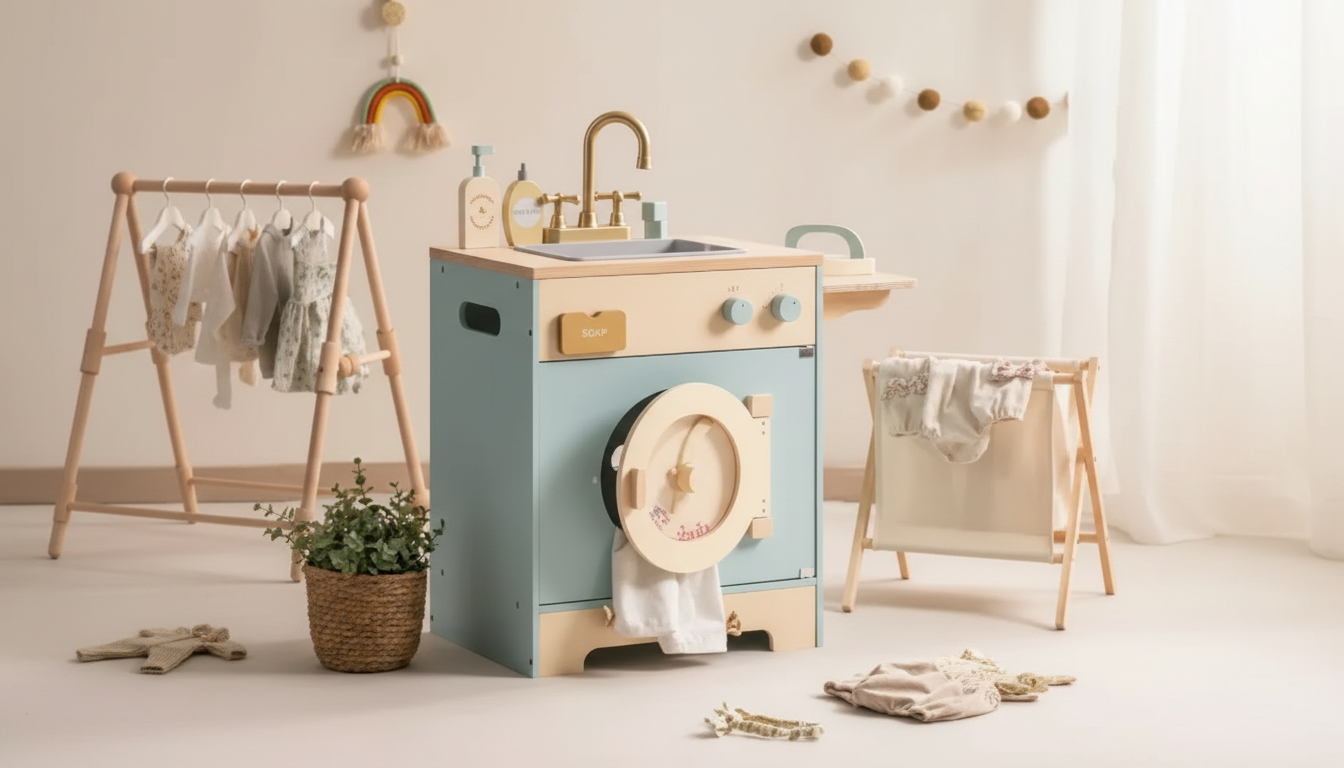
Wooden Kitchen Washer Playset with Sink and Accessories
A wooden kitchen washer playset brings everyday routines into imaginative play, letting kids “wash,” “prep,” and “clean up” in a space sized just for them. With a sink area and themed accessories, it supports open-ended roleplay while encouraging helpful habits and hands-on coordination. For families building a play corner that feels realistic without being overwhelming, a combined sink-and-washer setup creates a natural home base for stories, teamwork, and tidy-up practice.
What this playset is designed to do
- Creates a pretend kitchen + wash station where kids can act out cooking, rinsing, and tidying.
- Encourages cooperative play through shared roles like “chef,” “helper,” or “dishwasher.”
- Builds fine-motor skills through turning, placing, sorting, and organizing accessories.
- Supports language development through storytelling and naming tools, foods, and tasks.
Highlights to look for in a sink-and-washer playset
- Sturdy wooden construction for stable play and longer life in busy playrooms.
- Realistic sink area that anchors routines like washing produce, filling cups, or rinsing dishes.
- Accessory set that includes a mix of “tools” and “food” for varied scenarios.
- Easy-to-reach storage spots (shelves/hooks/bins) to make cleanup part of play.
- Smooth edges and child-safe finishes for everyday handling.
Wooden sets are often chosen for their weight and stability—especially helpful when kids lean in while “scrubbing,” loading, or sorting. For general toy safety guidance, it’s also worth reviewing recommendations from the U.S. Consumer Product Safety Commission (CPSC) and the American Academy of Pediatrics (AAP).
What’s included and how it can be used
The charm of a combined station is that it can “reset” the storyline again and again: rinse at the sink, move items to the washer area, then return everything to storage for the next shift.
- Sink zone: pretend rinsing, washing, and “closing the kitchen” routines.
- Washer/laundry-style roleplay: sorting, loading, unloading, and folding stories.
- Accessories: rotate items to set up themed days (breakfast café, grocery wash, cleanup crew).
- Kid-led routines: set a simple play sequence—prep → wash → serve → tidy.
Quick guide to play zones and activities
| Area or item | Play ideas | Skills supported |
|---|---|---|
| Sink | Rinse dishes, wash pretend fruits/veggies, fill cups, cleanup time | Sequencing, coordination, responsibility routines |
| Washer-style section | Sort “laundry,” load/unload, match pairs, pretend detergent steps | Sorting, memory, step-by-step thinking |
| Accessories | Set up a café, grocery station, or cleaning crew roleplay | Imagination, vocabulary, social play |
| Storage spaces | Put-away game, timed tidy-up, category sorting | Organization, autonomy, habit building |
Ways it supports learning through everyday routines
- Fine-motor practice: grasping small pieces, placing items carefully, turning controls.
- Early math: sorting by type, counting items, grouping sets for “orders.”
- Communication: taking turns, asking for tools, narrating steps and stories.
- Independence: repeating a familiar “wash and tidy” sequence builds confidence.
- Social-emotional growth: practicing helpful roles and cooperative cleanup.
Even short roleplay sessions can mirror real home rhythms: “First we prep, then we wash, then we put everything away.” When kids repeat that loop, they get to feel capable—without the pressure of getting it “perfect.”
Safety, materials, and care tips
- Check age recommendations and supervise younger children with small accessories.
- Inspect wooden parts for splinters or rough edges; stop use if damage appears.
- Wipe clean with a slightly damp cloth; avoid soaking wooden parts.
- Store accessories in a dedicated container to reduce lost pieces and tripping hazards.
- If the set includes moving parts, ensure hinges/turners are used gently to prevent pinches.
Setup and playroom placement
- Choose a flat, stable surface and leave space for doors or moving parts to open.
- Place near a play kitchen, toy pantry, or pretend grocery area to expand story options.
- Create a simple “cleanup station” bin nearby so putting pieces away is easy.
- Rotate accessories weekly to keep play fresh without adding clutter.
For shared spaces, placing the set along a wall can help define the play zone while keeping walkways clear. A small “menu board” (paper on a clipboard) or a basket of towels can add new story prompts without adding bulky toys.
Gift ideas and who it’s great for
- Helpful for kids who love copying household routines like washing dishes or doing laundry.
- A strong fit for siblings or playdates because roles naturally divide.
- Pairs well with pretend food sets, play cookware, or a small apron/chef hat.
- Ideal for birthdays and holiday gifting where a centerpiece toy anchors a play corner.
For a bundled gift feel, consider pairing the main playset with a quieter build-and-display activity for downtime—like the Luminous Wooden LED Light Globe 3D Puzzle Model Kit.
Product details and availability
The Wooden Kitchen Washer Playset with Sink and Accessories is currently listed as in stock. Visit the product page for the latest price, photos, and any included accessory notes, and consider measuring the intended space so the playset fits comfortably with room to play.
FAQ
What age is a wooden kitchen washer playset best for?
Many kids start enjoying pretend kitchen routines around ages 3–7, when roleplay and sequencing really take off. Always check the manufacturer’s age grading, and supervise toddlers closely if the set includes smaller accessories.
How do wooden playsets compare to plastic for durability and care?
Wooden playsets are often heavier and more stable, which can help them hold up to frequent use and energetic play. Care is usually simple—wipe with a slightly damp cloth and avoid soaking to protect the finish and the wood.
What accessories matter most for open-ended play?
A balanced mix works best: a few “tools” (cups, utensils, pretend soap/cleaners), a few pretend foods, and accessible storage pieces for resetting the scene. Variety makes it easy to switch between café play, grocery washing, and cleanup routines without needing a lot of extra toys.








Leave a comment