Solve a Wooden Piece Puzzle: Steps to Unlock It

How to solve a wooden piece puzzle?
Wooden piece puzzles can feel impossible at first because the parts often rely on a hidden sequence, not strength. The fastest way to solve one is to slow down, study how it’s built, and work in a controlled, repeatable way so you can undo steps without getting lost.
Step-by-step approach
1) Identify the puzzle type and “locked” areas
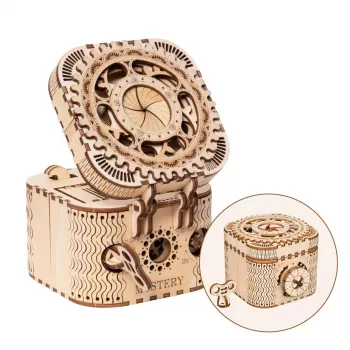
Look for seams, pins, pegs, or pieces that sit deeper than others. Many wooden burrs, interlocking rings, and cage-style puzzles have one “key” piece that moves slightly while others stay rigid. If nothing shifts at all, the puzzle is likely fully locked until a specific piece is nudged first.
2) Work over a table and track orientation
Keep the puzzle on a flat surface and choose a “top” side to maintain orientation. If pieces start coming out, line them up in the order removed. A quick photo after each move can save a lot of time during reassembly.
3) Test gentle movement—never force
Apply light pressure in one direction at a time: slide, lift, twist, then reset. Wood-on-wood friction can trick you into forcing a wrong move; instead, look for the path that moves with minimal resistance. If a piece binds, back up and try a different sequence.
4) Reduce the puzzle to sub-assemblies
Once the first piece is out, the puzzle often becomes easier. Remove parts until you can clearly see repeating shapes or mirrored halves. For burr puzzles, build a mental model of the “cross” or core and determine which notch patterns must interleave.
5) Reassemble in reverse—with alignment checks
Put pieces back in the reverse order they were removed, verifying that each piece sits flush before adding the next. If the final “key” piece won’t lock in smoothly, a hidden part is usually misaligned by a millimeter—back up one step and reseat.
For a more detailed walkthrough and extra tips for common wooden puzzle styles, visit https://desireddropsrealm.shop/how-to-solve-a-wooden-piece-puzzle/.
FAQ
How do you reset a wooden puzzle after taking it apart?
Reassemble it in the exact reverse order you removed pieces, keeping the same orientation throughout. If something won’t slide into place easily, a previous piece is slightly out of position—back up one step and reseat it flush.










Leave a comment