Cat Tower vs Cat Condo: Key Differences Explained
What is the difference between a cat tower and a cat condo?
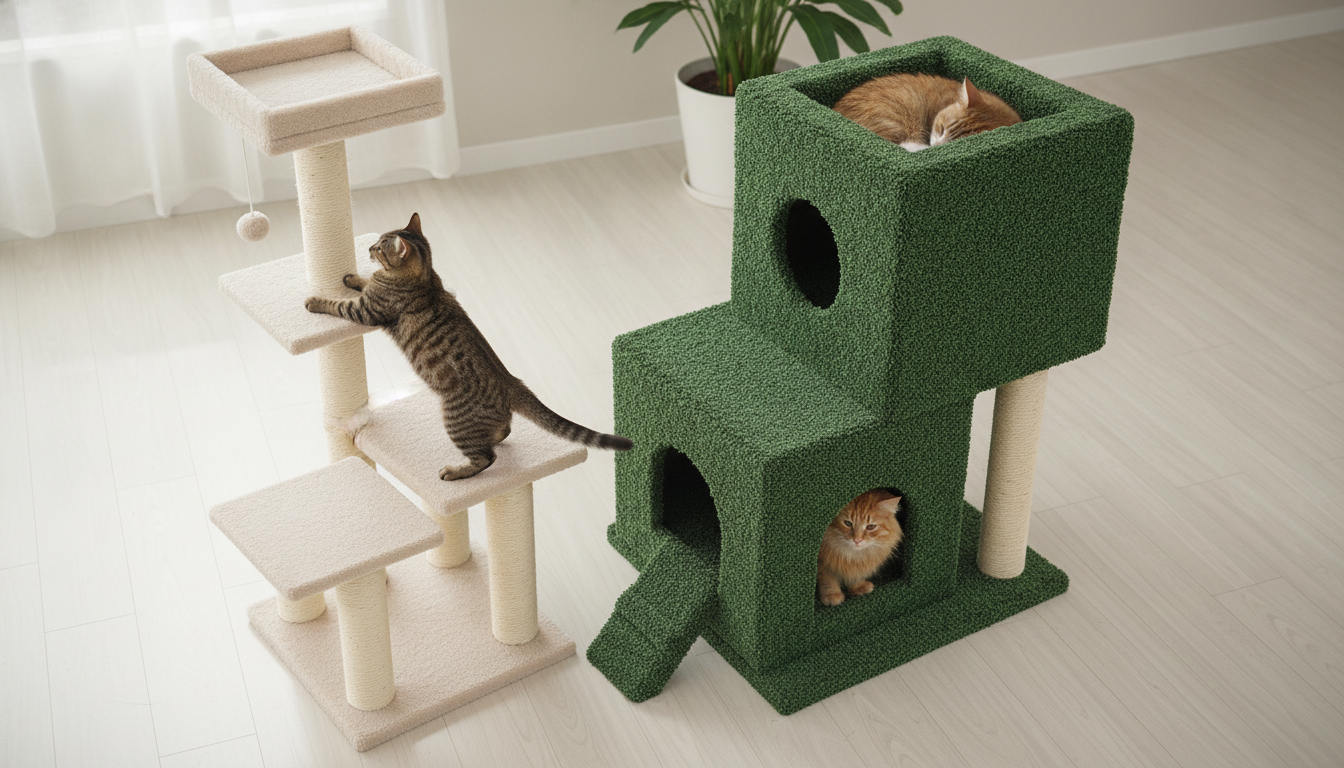
A cat tower is primarily a vertical activity center designed for climbing, scratching, perching, and looking out over a room. A cat condo is more focused on enclosed hideaways—cozy cubbies or compartments where a cat can retreat, nap, and feel secure. Many modern cat furniture pieces combine both ideas, but the emphasis differs: towers prioritize height and movement, while condos prioritize shelter and privacy.
Cat tower: built for climbing and territory
Cat towers usually feature multiple platforms at different heights, ramps or steps, and one or more scratching posts (often sisal-wrapped). They’re a strong choice for active cats, multi-cat homes where vertical space reduces tension, and cats that love surveying their surroundings from a high perch. If your cat tends to zoom, jump, and scratch furniture, a tower can redirect that energy into a dedicated, cat-approved zone.
Cat condo: built for hiding and resting
A cat condo typically includes enclosed boxes, tunnels, or covered beds that mimic the safe, den-like spaces cats seek. This style is ideal for shy cats, senior cats that prefer predictable lounging spots, or any cat that naps frequently and wants a private “room.” Condos may still include a small perch or a scratcher, but the main draw is the enclosed comfort.
How to choose between them
Start with your cat’s daily habits. Pick a tower if your cat craves height, plays hard, or needs more scratching options. Pick a condo if your cat hides under beds, prefers covered spaces, or gets stressed by noise and activity. For many households, a hybrid model—tall with at least one enclosed cubby—covers both needs without taking up much extra floor space.
For a deeper comparison and shopping tips, visit the full guide: https://desireddropsrealm.shop/what-is-the-difference-between-a-cat-tower-and-a-cat-condo/.
FAQ
What size cat furniture is best for large cats?
Look for wider platforms, larger condo openings, and a higher weight rating than your cat’s current weight. Sturdier bases and thicker posts help prevent wobbling when bigger cats jump and turn.









Leave a comment