Air Compression Leg Massager Guide: Foot to Thigh Relief
What Air Compression Massage Does
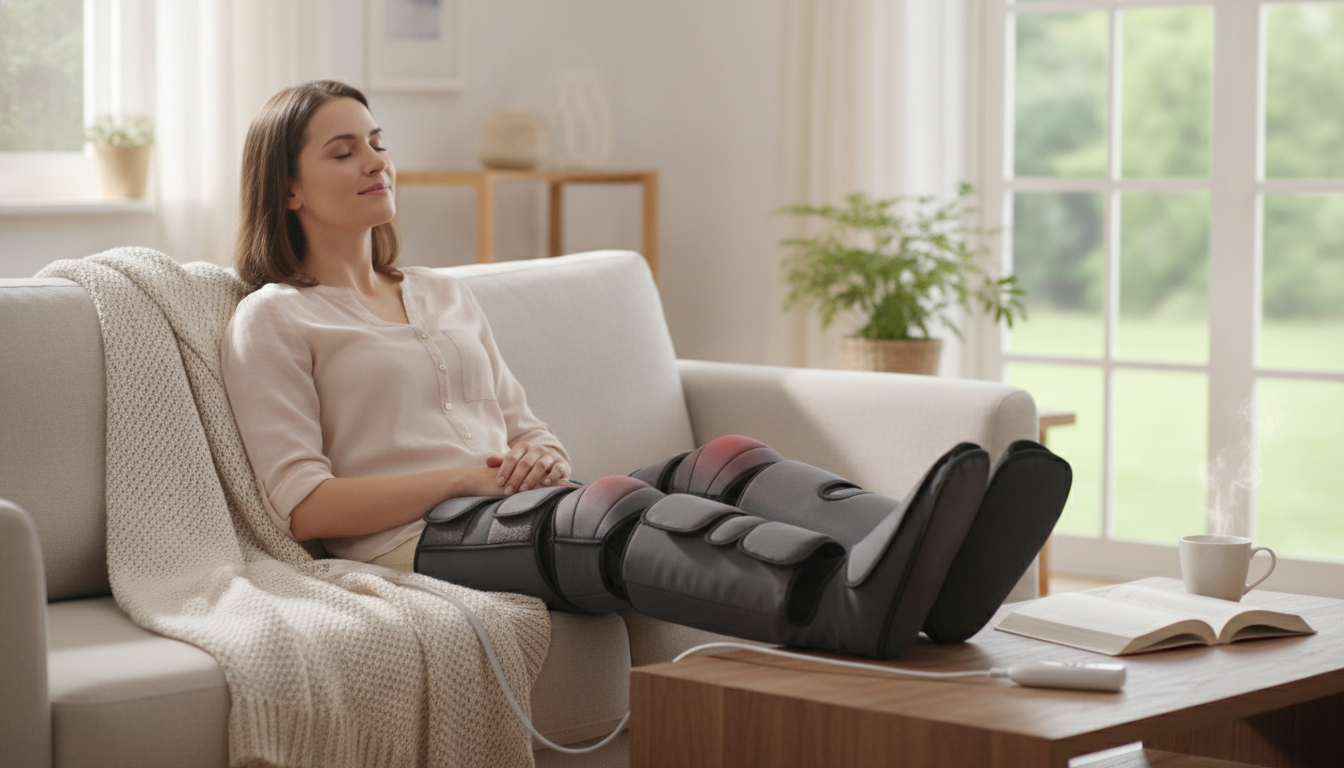
An air compression leg massager uses inflatable chambers that fill and release in a steady rhythm. That squeeze-and-release pattern can feel like a rolling “push” that starts at the foot/ankle area and moves upward through the calf and thigh. For many people, this kind of pulsing pressure helps legs feel less heavy and more comfortable after long days on your feet, tough workouts, or hours of sitting.
Because the pressure is distributed across multiple zones (instead of pressing on one point), it’s also useful when discomfort isn’t limited to a single spot—like when foot fatigue, calf tightness, and thigh heaviness show up together. Compression-style devices are commonly used to support circulation and fluid movement; the Cleveland Clinic provides a helpful overview of compression therapy basics and typical uses.
Learn more from an authoritative overview here: Cleveland Clinic — Compression Therapy.
Common Reasons People Use It (Foot to Thigh)
Leg discomfort can build from the ground up. Feet take the impact, calves tighten to stabilize, and thighs do the heavy lifting—so it’s common for soreness or fatigue to “travel” upward over the course of a day.
- Foot fatigue: Soreness after walking, standing shifts, or wearing shoes with poor support.
- Calf tightness: Post-workout stiffness, cramp-prone muscles, or that “locked up” feeling after running.
- Knee-area discomfort: Tension in surrounding muscles that can make knees feel overworked.
- Thigh heaviness: Long travel days, desk work, or training sessions that leave legs feeling full and tired.
- Recovery routines: Pairing compression with hydration, light movement, and stretching for end-of-day comfort.
If swelling is sudden, one-sided, painful, or unexplained, it’s a good reason to get medical guidance promptly. For general guidance on leg swelling and when to seek care, see: Mayo Clinic — Leg swelling (overview and when to seek care).
Features That Matter Most
Not all air compression leg massagers feel the same. Comfort and results usually come down to fit, mode options, and how adjustable the pressure is—especially if you’re sensitive around the calves or near the knee area.
- Coverage and fit: Wraps should comfortably reach foot/ankle, calf, and thigh without pinching behind the knee.
- Pressure levels: More steps make it easier to find a “just right” squeeze.
- Massage modes: Many people prefer sequential compression (bottom-to-top) for a smoother rhythm, while full compression can feel more intense.
- Time controls: A timer or auto shutoff helps prevent overdoing it and keeps sessions consistent.
- Ease of use: A simple controller, quick setup, and wipe-clean materials matter for everyday use.
- Portability: Lightweight designs are easier to store, pack, or keep near your desk.
| Feature | Why it helps | What to check before buying |
|---|---|---|
| Multi-zone coverage | Targets feet, calves, thighs, and around the knee area | Wrap length and chamber layout |
| Adjustable intensity | Comfortable for sensitive or very tired legs | Number of pressure levels |
| Sequential modes | Encourages an upward compression rhythm | Mode options and how they cycle |
| Timer / auto shutoff | Prevents overly long sessions | Session lengths offered |
| Fit range | Comfort and effectiveness depend on snug contact | Strap system and size guidance |
How to Use It for Better Comfort
A good session should feel relieving, not painful. If you’re new to compression massage, a conservative start usually leads to better long-term comfort.
- Start low: Use the lowest pressure for the first 1–3 sessions to learn what feels good.
- Positioning: Sit or recline with legs supported. Avoid sharply bending the knee if it feels restrictive.
- Session length: Many people prefer 10–20 minutes, especially when using it regularly.
- Zone focus: After standing, prioritize calves. After heavy walking, include feet. After workouts or travel, add thighs for full-leg relief.
- Pairing tips: Gentle stretching after can help keep that loosened feeling; hydration may help if you’re cramp-prone.
- Consistency: Using it after the same trigger activity (workday, flight, training) makes the routine easier to stick with.
Safety Notes and When to Ask a Clinician
Compression devices are meant to feel like a firm but comfortable hug. Stop right away if anything feels sharp, alarming, or “wrong.”
For background on DVT and why clot history matters, see: MedlinePlus — Deep vein thrombosis (DVT).
Who It’s Best For (and Who Should Skip It)
Product Spotlight: Air Compression Leg Massager
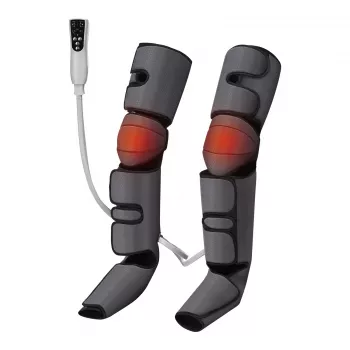
For multi-area comfort that runs from foot through calf and thigh (including around the knee area), the Air Compression Leg Massager for Foot, Calf, Thigh & Knee Pain Relief is built for full lower-body coverage. Adjustable compression helps tailor sessions for a lighter, relaxing squeeze or a deeper, more “reset” style feel after tough days.
More In-Stock Finds
- Luminous Wooden LED Light Globe 3D Puzzle Model Kit
- Gold Metal Decorative Ring Charms for Apple Watch Bands
- Minimalist Bow Knot Bangle Bracelet
Care, Cleaning, and Storage
FAQ
How long should a compression massage session last?
A conservative session is often 10–20 minutes, especially when starting out. Begin at a low intensity, follow the device’s timer guidance, and stop if you feel discomfort or numbness.
Can an air compression leg massager help with swelling after sitting or travel?
It may help legs feel lighter by supporting circulation and fluid movement after long periods of sitting. Sudden, one-sided, painful, or unexplained swelling should be evaluated by a clinician.
Is it safe to use around knee pain?
It’s commonly used to support comfort in the surrounding muscles and the overall leg, which can make the knee area feel less overworked. Avoid use with acute injuries, severe pain, or post-surgical restrictions unless a clinician has cleared it.










Leave a comment