Dog Ate Memory Foam? What to Do Next (Vet Steps)
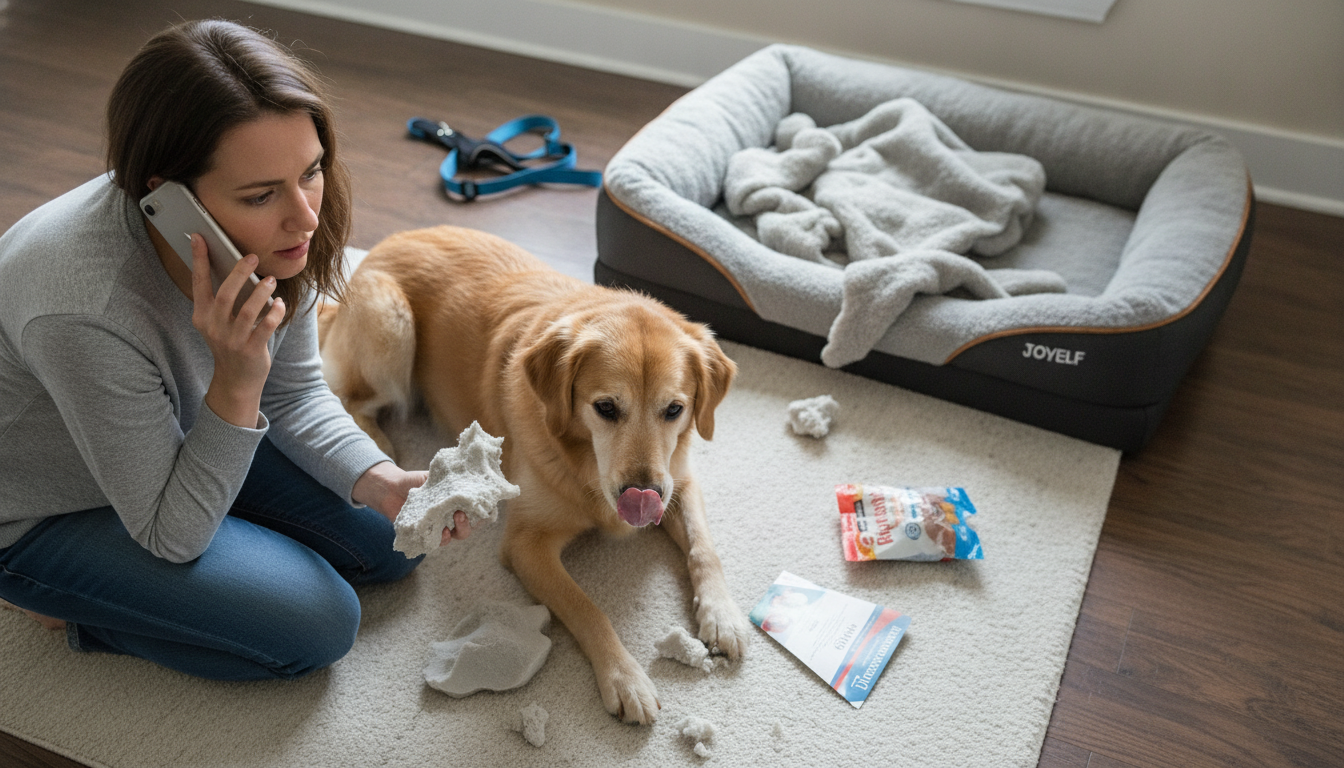
What do I do if my dog ate memory foam?
If your dog ate memory foam, treat it like a potential foreign-body emergency. Memory foam can expand, clump together, and create an intestinal blockage, especially in small dogs or if a large piece was swallowed.
Step 1: Check your dog and the foam right away
Look for choking (gagging, pawing at the mouth, trouble breathing) and remove any foam still within easy reach of the mouth—only if it’s safe to do so. Estimate how much is missing and whether the foam had fabric, zippers, buttons, or other materials attached, since those increase blockage risk.
Step 2: Call a veterinarian promptly
Contact your vet or an emergency animal hospital for guidance, even if your dog seems normal. Be ready to share your dog’s weight, the time of ingestion, the approximate amount eaten, and whether the foam came from a product that may contain flame retardants, glues, or other chemicals.
Step 3: Don’t induce vomiting unless a vet tells you to
Vomiting can be risky if large, spongy pieces are involved, and it may not bring the foam back up. Follow professional instructions—your vet may recommend monitoring at home, an exam, X-rays/ultrasound, endoscopy, or other treatment depending on the situation.
Step 4: Watch closely for blockage or poisoning symptoms
Seek urgent care if you notice repeated vomiting, loss of appetite, lethargy, abdominal pain or a tense belly, diarrhea, constipation, straining without producing stool, drooling, restlessness, pale gums, or any breathing difficulty. Symptoms can appear hours to a couple of days after ingestion.
For a more detailed breakdown of warning signs and what to expect at the vet, visit https://desireddropsrealm.shop/what-do-i-do-if-my-dog-ate-memory-foam/.
FAQ
Can memory foam cause an intestinal blockage in dogs?
Yes. Memory foam can form a dense, spongy mass that’s difficult to pass, and it may expand or stick together in the stomach or intestines. Blockage risk is higher with larger amounts, small dogs, and added materials like fabric or zippers.











Leave a comment